Review: Autism Quote Design, Embrace Differences
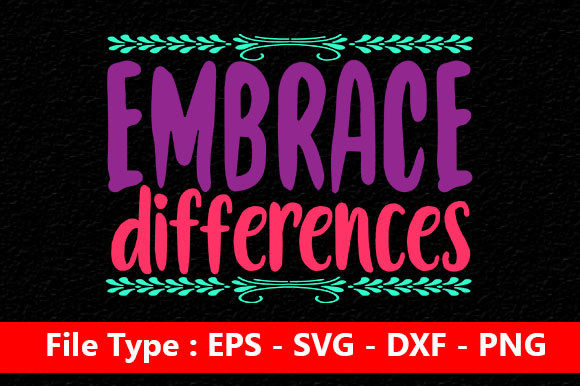
As a designer who has spent countless hours digitizing and stitching out files for clients, I have learned that the most powerful designs are often the simplest. When I first pulled up Autism Quote Design, Embrace Differences on my screen, I was not looking for flashy gradients or complex shading. I was looking for clarity, emotional resonance, and technical viability for real-world production. This design, categorized under Crafts and Graphics, presents itself as a versatile digital asset, but does it hold up when the needle hits the fabric? After reviewing the file structure and visualizing its application across various textiles, I believe this piece offers significant value for makers who prioritize message over ornamentation.
First Impressions and Visual Personality
The immediate mood of Autism Quote Design, Embrace Differences is one of gentle advocacy. It avoids the chaotic visual noise that sometimes plagues awareness-themed graphics, opting instead for a clean, readable layout. For an embroidery designer, this is crucial. Complex backgrounds often turn into muddy stitch masses on textured fabrics like terry cloth or fleece. The open space in this design allows the thread to breathe, ensuring that the quote remains the focal point. The visual personality is professional yet warm, making it suitable for a wide range of demographics, from pediatric clinics to family-oriented boutique shops.
Real-World Application: The Custom Tote Bag Scenario
To truly evaluate a design, I always imagine it on a specific product. Let us consider a custom embroidered tote bag, a staple item for many Etsy sellers and craft fair vendors. Canvas is a forgiving but coarse fabric. If a design has too much stitch density, it can pucker the material or cause the hoop marks to remain visible after washing. Because Autism Quote Design, Embrace Differences relies on clear lines and likely utilizes a mix of running stitch for outlines and moderate fill stitch for any graphic elements, it sits well on canvas. The result is a crisp, legible message that enhances the perceived value of the handmade product. Customers are not just buying a bag; they are buying a statement piece that aligns with their values, which drives higher engagement and buyer trust.
Versatility Across Product Lines
Beyond tote bags, this design shines in custom apparel. Imagine it stitched onto the left chest of a unisex sweatshirt. The scale needs to be adjusted carefully, but the simplicity of the quote ensures it does not look cluttered on a curved surface. For baby embroidery projects, such as bibs or onesies, the design’s gentle tone is appropriate. However, one must be cautious with stretchy fabric. Without proper stabilization, even simple text can distort. This is where the designer’s skill comes into play—choosing the right stabilizer is just as important as the design itself.
It is also worth noting the file formats provided. The ZIP file contains EPS, SVG, PNG, and DXF files. While these are excellent for scrapbooking, cut machines, and vinyl decals, experienced embroiderers should note that these are primarily vector and raster graphics, not native machine embroidery formats like PES or DST. This means you may need to use digitizing software to convert these design assets into a stitch file, or use them as templates for applique. If you are using them for vinyl decals on a finished garment, the application is straightforward. For actual stitching, you will need to ensure your digitizing process maintains the integrity of the original quote.
Technical Considerations and Stitching Clarity
When working with thread colors, contrast is key. Since this is a quote-based design, I recommend testing it in high-contrast combinations first, such as white thread on navy blue fleece or black thread on natural linen. This ensures maximum readability. If you plan to use it as an applique design, the SVG and DXF files are particularly useful for cutting the fabric shapes accurately before stitching them down. This technique reduces stitch density on the final product, making it softer and more comfortable against the skin—a critical factor for personalized gifts intended for children or individuals with sensory sensitivities.
Be mindful of small hoop sizes. If you are stitching on a cap or a small patch, you may need to resize the design. Always check the legibility of the text at smaller scales. Tiny lettering can become illegible if the satin stitch width is too narrow or if the fabric texture interferes with the stitch definition. I advise creating a printable mockup or stitching a test sample on scrap fabric before committing to a final finished product.
Commercial Viability and Brand Consistency
For small business owners and creative entrepreneurs, consistency is vital. Autism Quote Design, Embrace Differences fits seamlessly into a brand identity focused on inclusivity and awareness. It works well for holiday embroidery campaigns during Autism Awareness Month or as part of a year-round inclusive collection. The professional look of the design elevates the perceived quality of your small shop product, allowing you to price your items competitively while maintaining healthy margins.
However, always verify licensing terms. While the description mentions use for scrapbooking and cut machines, commercial rights for selling stitched items should be confirmed with the creator. Assuming proper licensing, this design can be a cornerstone of your commercial embroidery portfolio, appealing to schools, therapy centers, and families alike.
Final Designer Notes
Before launching this design in your store, take these practical steps:
- Test on scrap fabric: Always stitch out a sample to check for puckering or thread breaks.
- Check contrast: Ensure the thread color stands out against the fabric background, especially for dark fabric.
- Verify file usage: Remember that the provided files are graphics (EPS, SVG, PNG, DXF). You may need to digitize them for machine embroidery or use them for vinyl applications.
- Consider the audience: This design is ideal for personalized gifts and awareness campaigns, so market it accordingly.
- Use proper stabilizer: Match the stabilizer weight to the fabric type to prevent distortion.
In conclusion, Autism Quote Design, Embrace Differences is a thoughtful, versatile asset for designers and makers. Its strength lies in its clarity and emotional impact. By understanding its technical requirements and leveraging its visual simplicity, you can create meaningful, high-quality products that resonate with your customers. Whether you are creating a tote bag design for a local fundraiser or a sweatshirt embroidery for a client, this design offers the professional polish needed to succeed in the competitive world of handmade goods.