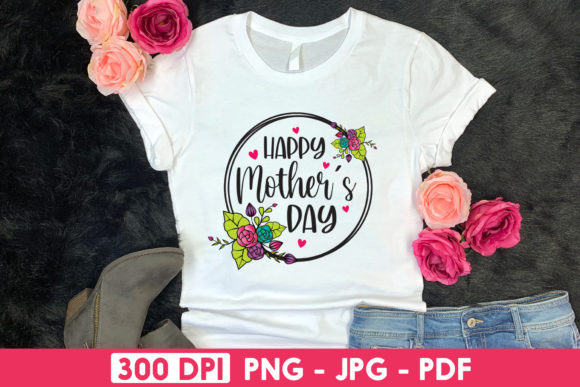
Reviewing the Happy Mothers Day Mom Quote Sublimation Design
As a designer who spends half my life staring at digitized paths and the other half wrestling with hoop tension, I have learned that not every pretty graphic translates well to thread. When I first pulled up the Happy Mothers Day, Mom Quote Sublimation file, my initial reaction was one of cautious optimism. It is listed under Crafts and Graphics, which usually implies a digital-first approach, but the real test is always how it behaves when subjected to the mechanical realities of an embroidery machine.
The design presents itself with a clean, celebratory mood. The layout feels balanced, avoiding the cluttered look that plagues so many holiday-themed assets. For those of us in the business of creating handmade products, visual personality is everything. This piece carries a warmth that fits perfectly into the niche of personalized gifts and boutique branding. However, seeing it on a screen is vastly different from seeing it stitched out on a textured cotton twill or a stretchy jersey knit.
From Screen to Stitch: Real-World Application
I recently had a client request a custom embroidered tote bag for a local spring market. They wanted something that screamed "giftability" without looking cheap. This is where the Happy Mothers Day, Mom Quote Sublimation entered my workflow. Since the product description notes it includes high-resolution 300 DPI PNG, JPG, and PDF files with a transparent background, I used these assets to create printable mockups before committing to thread.
The transparency feature is crucial for digital embroidery file preparation. It allowed me to overlay the quote onto various fabric textures in Photoshop to gauge contrast. I found that the design’s visual appeal holds up remarkably well on light-colored canvas, which is standard for tote bag design. However, the lack of specific stitch data in the download means I had to manually assess how the lettering would translate. If you are an Etsy seller or small shop owner, you know that customers judge quality by stitching clarity. A blurry or poorly defined quote can destroy customer trust instantly.
Navigating Fabric and Hoop Constraints
One of the most critical aspects of using a sublimation-style graphic for embroidery is understanding its limitations regarding hoop size and fabric type. The design is sized at 12x12 inches. This is a substantial footprint. While this works beautifully for sweatshirt embroidery or large pillow covers, it poses challenges for smaller items.
If you are attempting to use this on a cap or a baby item, you must be careful. A 12-inch design simply will not fit in standard cap frames or small baby bib hoops without significant resizing. When scaling down, you risk losing the integrity of the lettering. Tiny lettering often becomes illegible when converted to satin stitch or fill stitch because the threads merge together. I always advise testing the design on scrap fabric first, especially if you plan to reduce the size.
Furthermore, consider the fabric texture. On thin fabric or stretchy material, a design of this magnitude requires robust stabilizer support. Without proper stabilization, the weight of the thread can cause puckering, ruining the professional look of your finished product. For dark fabric, you must ensure your thread colors provide enough contrast. I recommend checking the design in black and white mockups to verify readability before selecting your final thread colors.
Commercial Viability and Brand Consistency
For commercial embroidery projects, consistency is key. Whether you are producing aprons for a boutique or kitchen towels for holiday gifts, the design must align with your brand’s aesthetic. The Happy Mothers Day, Mom Quote Sublimation offers a versatile base that can be adapted. However, since the note states "This download does not inc," implying it may not include the actual embroidery machine file formats like DST or PES, you will need to digitize it yourself or hire a digitizer.
This is a vital distinction for craft business owners. Selling a finished product made from a sublimation graphic is different from selling the digital asset itself. You must confirm licensing before selling finished items or digital products. If you are creating an embroidered patch, the density of the stitch work needs to be adjusted to prevent the patch from becoming too stiff. A heavy fill stitch might look great on a wall hanging but feel uncomfortable on a wearable garment.
Practical Notes for the Embroidery Designer
Before you commit to a full production run, here are my practical recommendations for working with this type of graphic:
- Test on Scrap Fabric: Always run a test stitch-out on the same material you intend to use for the final product. This helps you identify any issues with stitch density or registration.
- Check Thread Color Contrast: Ensure your chosen thread colors stand out against the fabric background. High contrast improves recognition and professionalism.
- Review Stitch Density: If you are digitizing this from the PNG, avoid overly dense fill stitches in small areas to prevent thread breaks and fabric distortion.
- Confirm Hoop Size: Verify that your machine’s hoop can accommodate the 12x12 inch dimensions, or plan to split the design if necessary.
- Inspect Small Details: Zoom in on the corners of the letters. Sharp corners may need to be softened in the digitizing process to ensure clean stitching.
- Use Proper Stabilizer: For larger designs on stretchy fabrics, a cut-away stabilizer is often safer than tear-away to maintain shape after washing.
Final Thoughts on Value and Presentation
The Happy Mothers Day, Mom Quote Sublimation is a strong contender for designers looking to expand their holiday embroidery project lineup. Its strength lies in its clear, joyful message and high-resolution source files that make mockup creation easy. For an Etsy seller, having high-quality visuals for listings is half the battle, and this asset delivers on that front.
However, its true value is realized only through careful execution. It is not a plug-and-play solution for every machine. It requires a designer’s eye to adapt it from a static graphic into a dynamic, tactile experience. When done correctly, it elevates the perceived value of custom apparel and handmade merchandise. It transforms a simple t-shirt or mug into a cherished keepsake.
In the world of small shop products, attention to detail separates the amateurs from the professionals. By taking the time to understand how this design interacts with different fabrics, hoop sizes, and stitch types, you can ensure that your final product meets the high standards your customers expect. Whether you are creating nursery decor or personalized gifts for a wedding, this design offers a solid foundation, provided you respect the technical demands of embroidery.
Remember, the goal is not just to put thread on fabric, but to create an emotional connection through craft. This design has the potential to do just that, as long as you approach it with the precision and care it deserves. Always double-check the license terms for commercial use, and never skip the test stitch. Your reputation as a maker depends on the quality of every single stitch.